Key Highlights
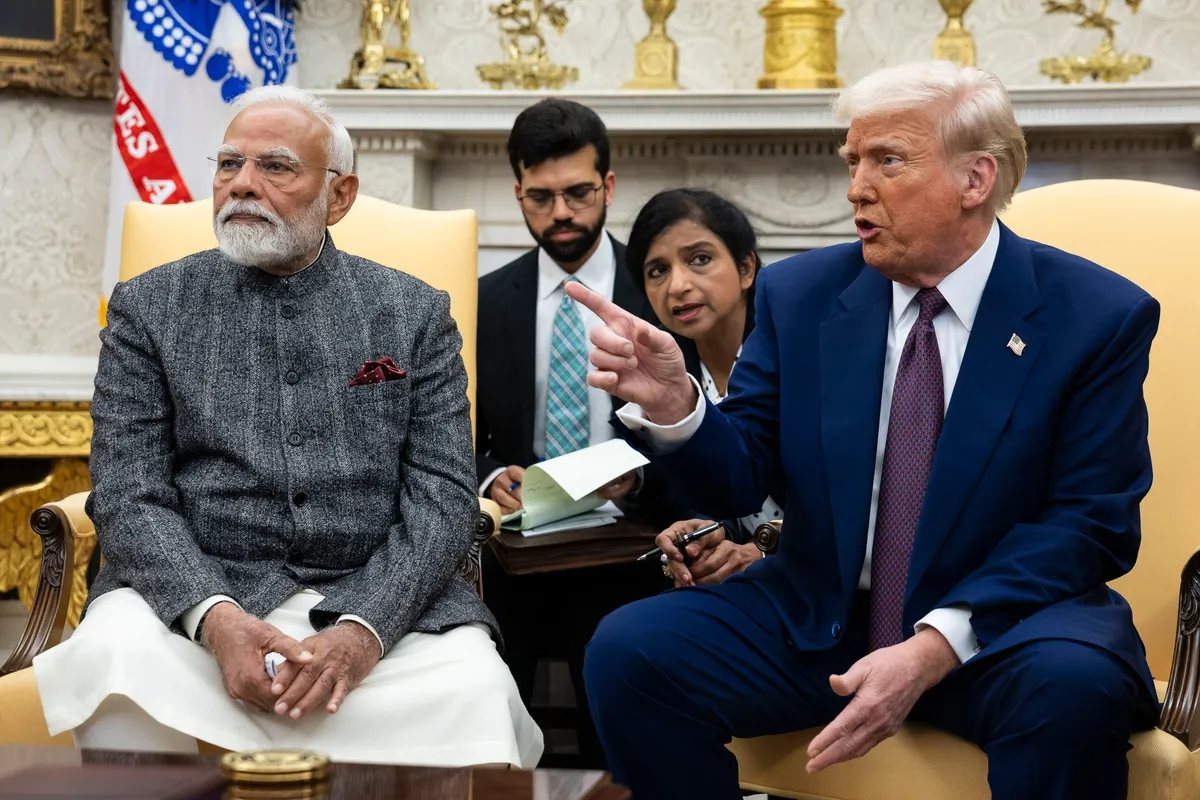
- President Donald Trump has announced a 25% tariff on Indian goods, citing India’s high tariffs and an ongoing trade deficit as the main triggers.
- An additional ‘penalty’ will target Indian imports specifically tied to purchases of Russian oil and military equipment, intensifying trade negotiations.
- The new US tariffs, effective August 1, threaten key sectors such as textiles, automobiles, and jewelry, with the penalty details still to be fully disclosed.
- Prime Minister Narendra Modi and Commerce Minister Piyush Goyal have emphasized India’s commitment to a mutually beneficial bilateral trade agreement and national interest.
- The US remains India’s largest trading partner, but this development poses major challenges for bilateral trade and small businesses.
- Both political and business groups in India are voicing strong reactions, while ongoing talks aim to prevent further disruption to the trade deal.
Introduction
The United States, under President Donald Trump, has reignited trade tensions with India, a south Asian nation, by announcing a steep 25% tariff on Indian goods. This bold move comes as part of a wider effort to negotiate a new trade deal and address what Trump calls “strenuous and obnoxious” barriers to US products. India, led by Prime Minister Narendra Modi, now faces a critical challenge as it works to safeguard its economic interests and maintain its status as a vital partner to the US amidst evolving trade negotiations.
Overview of Trump’s 25% Tariffs on India
US President Donald Trump’’s administration has imposed a sweeping 25% tariff on Indian goods, effective August 1, sparking anxiety among exporters and small businesses. The measure, announced via Trump’s Truth Social platform, targets a broad list of Indian imports and follows months of stalled trade negotiations. The driving force behind these high tariffs is the persistent US trade deficit with India and ongoing disagreements over market access. As the White House doubles down, both nations are locked in efforts to hammer out a new bilateral trade agreement, with significant consequences for the financial year ahead.
Let’s look more closely at the announcement details and the rationale behind these tariffs.
Announcement Details: Date, Scope, and Key Products Targeted
Trump’s 25% tariff on Indian goods takes effect August 1, 2025. This move follows a series of warnings and earlier, paused tariff hikes, marking a sharp escalation in US-India trade confrontations. The scope covers a range of sectors, although pharmaceuticals and select electronics currently remain exempt.
Exporters received the news with concern, given that the US is India’s largest trading partner for goods, with bilateral trade reaching $190 billion in 2024. The targeted products include textiles, gems and jewelry, automobiles, steel, aluminum, and solar equipment.
| Key Sector | Tariff Rate | Status | Notes |
|---|---|---|---|
| Textiles | 25% | Tariff applies | Expected to hit labor-intensive exporters hard |
| Gems & Jewelry | 25% | Tariff applies | Sector warned of job losses |
| Automobiles | 25% | Tariff applies | Core focus for US negotiators |
| Steel & Aluminum | 25% | Tariff applies | Industry already under global pressure |
| Pharmaceuticals | Exempt* | Tariff exempted | India supplies nearly half of US generic drugs |
| Smartphones/Electronics | Exempt* | Tariff exempted | Temporary reprieve; subject to ongoing review |
*Exemptions are subject to change as negotiations continue.
With many key sectors in the crosshairs, industry leaders remain vigilant for updates, especially as ongoing trade talks could alter the list of affected goods.
Rationale Behind the New Tariff Imposition
At the heart of Trump’s tariff decision is a long-standing US trade deficit with India, which stood at $45.8 billion in the last financial year. The White House frames these duties as both leverage and remedy, aiming to extract concessions from India and address what Trump calls “the highest tariffs in the world.” On Truth Social, President Donald Trump described India as a “friend” but criticized its protectionist policies and massive barriers to US goods.
A further layer to this action is national interest: Trump and his advisers argue that these tariffs are necessary to push India toward a more open market, specifically in agriculture and dairy, which remain sensitive topics in trade negotiations. The US president has expressed frustration over slow progress, signaling a willingness to use tariffs as a means to finalize a new, mutually beneficial bilateral trade agreement.
Notably, the decision is also influenced by India’s continued purchases of Russian military equipment and energy, which has drawn criticism from Washington and triggered the additional “penalty” measure.
Understanding the ‘Penalty’ for India’s Trade with Russia
In addition to the 25% tariff, the US administration has introduced a unique penalty specifically targeting India’s trade ties with Russia. This measure is a direct response to India’s ongoing imports of Russian oil and vast quantities of military equipment, making it Russia’s largest buyer outside China. The penalty is designed to discourage such transactions at a time when the US is pressuring nations to limit support for Russia amid the Ukraine conflict. The full structure of this penalty remains unspecified, sparking uncertainty for New Delhi and major Indian industries.
Next, we’ll examine the legal basis of this penalty and which Indian sectors are most at risk.
Origins and Legal Basis of the Penalty Tariff
The penalty attached to Trump’s tariffs on Indian goods stems from US concerns regarding India’s deepening trade and defense relationship with Russia. Legally, the White House justifies this move under statutes that allow economic sanctions or penalties when national interest or global security is at stake. The US administration has repeatedly voiced frustration that India remains Russia’s top energy and military equipment buyer, even as other countries have scaled back.
American officials cite ongoing trade negotiations and the need to align partners with US foreign policy priorities as the rationale. The penalty is intentionally ambiguous, giving the US the flexibility to expand or adjust economic pressure as talks proceed. In effect, the penalty acts as both a warning and an incentive: reduce reliance on Russian oil and arms, or face escalating trade consequences. For New Delhi, this introduces a legal and diplomatic challenge in maintaining strategic autonomy while negotiating trade relief.
Specific Sectors and Goods Affected by the Penalty
The sectors most directly exposed to the US penalty are those tied to India’s dealings with Russia—primarily energy and defense. With India being the largest foreign buyer of Russian oil and military hardware, any product or sector linked to these transactions is particularly vulnerable.
- Oil and Energy Imports: Indian petroleum imports from Russia have surged, placing refineries and related industries under scrutiny.
- Military Equipment: Sectors manufacturing or dealing in Russian-origin defense hardware or components may face additional duties or compliance checks.
- Dual-Use Goods: Products that could have both civilian and defense applications may attract further restrictions.
- New Delhi’s State Enterprises: State-linked firms engaging in Russian trade could find themselves subject to broader US tariffs or exclusion from American markets.
The penalty’s details remain intentionally vague, but experts caution that indirect impacts—such as tighter financing and reduced US business—will ripple through these key sectors.
Historical Context: US-India Trade Relations Under Trump
US-India trade under President Donald Trump has been marked by repeated disputes and rising tariffs, even as both parties pursue a beneficial bilateral trade agreement. High tariffs, reciprocal duties, and tough rhetoric have defined Trump’s approach, leading to multiple rounds of negotiations. Commerce Minister Piyush Goyal has emphasized the importance of ongoing talks while also noting India’s resilience and rapid economic rise. With the latest round of tariffs, the stakes for trade talks and economic cooperation have never been higher.
Let’s compare these actions to previous tariffs Trump imposed on other allies and major economies.
Previous Tariffs Imposed on India and Other Allies
Historically, President Trump’s administration has not shied away from imposing tariffs on allies, including India, the European Union, and others, as a negotiation tactic. Earlier rounds saw tariffs on Indian steel and aluminum, prompting India to respond with retaliatory duties on US goods like Bourbon whiskey and motorcycles. These measures set the stage for today’s much larger 25% tariff.
Other allies, such as the European Union, Japan, and South Korea, have also faced US tariffs ranging from 10% to 25%, depending on the sector and the progress in trade deal talks. In each case, the aim was to pressure trading partners into opening their markets and reducing US trade deficits. The result has often been a mix of temporary deals, exemptions, and renewed disputes as global trade tensions mount—a cycle now repeating with India.
Comparison With Trump’s Tariffs on Canada, Mexico, and China
When compared to Trump’s previous actions against Canada, Mexico, and China, the 25% tariff on Indian goods stands out for its severity and timing. Tariffs on Canadian and Mexican goods have fluctuated between 10% and 35%, often linked to broader North American trade negotiations. China, on the other hand, has faced much heavier and wider-ranging tariffs—up to 125% at their peak—making the US-China trade war a defining feature of Trump’s presidency.
Unlike the huge blanket tariffs on China, Trump’s approach toward India mirrors the targeted, reciprocal tariffs seen with allies. The focus is on key sectors and sticking points in trade negotiations, such as agriculture and market access. Still, the penalty element related to Russia adds a unique twist not seen in other major US trade disputes, indicating a blend of economic and geopolitical strategy in Trump’s India policy.
Immediate Economic Impact on India
The economic aftershocks of the 25% US tariff are already being felt across India’s major export sectors. Analysts warn that GDP growth could take a hit of 30-40 basis points, with exporters facing order cancellations and delays while the penalty’s scope remains unclear. Sectors like pharmaceuticals, jewelry, and textiles are bracing for lost revenue. Despite the turbulence, India’s relatively strong domestic market offers some cushion, and policymakers remain hopeful that ongoing talks will help ease the blow to growth and trade.
The most exposed sectors and the broader consequences for Indian growth are explored next.
Sectors Most Vulnerable to US Tariffs
Several key Indian sectors are particularly vulnerable to Trump’s 25% tariffs, with the risk of substantial financial losses and job cuts looming large. Exporters and small businesses are especially concerned about their future access to the US market.
- Textiles and Apparel: These labor-intensive industries face immediate threats, with American buyers reportedly canceling or holding back orders.
- Jewelry and Gems: India’s massive jewelry sector, valued at over $10 billion in exports, is warning of job losses in the thousands.
- Automobile Components: This high-value sector, already under pressure globally, expects shrinking order books and delayed shipments.
- Steel, Aluminum, and Solar: These capital-intensive industries are bracing for reduced competitiveness and squeezed margins.
Small businesses, which form the backbone of India’s export landscape, are at heightened risk of disruption, making immediate government intervention crucial.
Potential Consequences for Indian Exporters and Growth
Indian exporters are facing uncertainty and financial stress as the US tariffs and penalty measures take effect. Many are halting expansion plans and pausing production as they await clarity from both New Delhi and Washington. The Federation of Indian Export Organisations has reported heightened anxiety among exporters, especially those supplying to major US retailers.
A direct impact could be a decline in export revenue, with knock-on effects for employment and investment in affected industries. Economic experts warn that the sudden imposition of tariffs may shave 0.3 percentage points off India’s GDP growth, particularly if the penalty component expands. There is also the risk of indirect effects, such as reduced foreign investment and currency volatility, which could further complicate recovery efforts.
Nevertheless, India’s robust domestic demand and government support may provide some resilience, offering a possible path to stabilization as trade negotiations continue.
Reactions in India: Political and Business Response
Political and business circles in India have responded loudly to Trump’s tariff move, with officials promising to protect national interest and opposition parties calling the decision unreasonable. Prime Minister Narendra Modi’s government, supported by Commerce Minister Piyush Goyal, has pledged to take all necessary steps for farmers and small businesses. Business groups and exporters, meanwhile, are demanding urgent clarity on the penalty’s scope and support to weather the fallout. The debate over the future of India-US trade has become a top national issue.
We’ll now detail official statements and the perspectives of business leaders and opposition parties.
Statements From Indian Government Officials
Government officials, led by Commerce Minister Piyush Goyal, have issued a series of measured but firm statements in Parliament and through the media. Goyal emphasized that “the government will take all necessary steps to safeguard national interest” and highlighted India’s transformation into one of the fastest-growing major economies. He reassured stakeholders that talks with the US remain active and that the welfare of farmers, exporters, and small businesses is a top priority.
Prime Minister Narendra Modi’s administration remains publicly committed to pursuing a fair, balanced, and mutually beneficial bilateral trade agreement. The government has convened meetings with industry groups and is studying the tariff’s full implications. “We have come out of the ‘Fragile Five’ and are now among the top five economies of the world,” Goyal told Parliament, signaling confidence in India’s economic fundamentals despite external pressures.
Perspectives From Business Groups and Opposition Parties
Indian business groups, particularly those representing exporters and small businesses, have voiced concern over the potential for job losses and revenue declines. The Federation of Indian Export Organisations described the tariffs as “disappointing,” with fears that uncertainty around the penalty will further disrupt exports. Industry leaders are urging the government to secure quick relief, warning that American buyers may shift orders to other countries or delay deals.
Opposition parties, including Congress, have sharply criticized both the Trump administration’s approach and the Indian government’s response. Congress MPs have described Trump’s move as an unreasonable threat and called for a more robust defense of India’s economic interests. The opposition has also accused the Modi government of failing to anticipate the fallout, labeling the situation a failure of foreign and economic policy. The debate underscores the deep concern among stakeholders about the future of India’s lucrative US trading relationship.
Responses and Measures Considered by India
In the wake of the US tariffs, India is evaluating a range of diplomatic and policy responses. Government officials have stressed their commitment to ongoing trade talks and safeguarding the interests of exporters, small businesses, and farmers. Options under consideration include reciprocal tariffs, direct negotiations, and support packages for affected industries. There’s also talk of strengthening ties with alternative markets and leveraging international forums to press India’s case. The coming weeks will be critical as both countries seek a resolution that upholds national interest.
The following sections outline India’s possible diplomatic maneuvers and domestic measures.
Diplomatic Options and Potential Retaliation
India’s diplomatic toolkit for responding to the US tariffs includes both negotiation and the threat of reciprocal action. Officials are keen to protect sensitive sectors while keeping the door open for a final agreement.
- Reciprocal Tariffs: India may consider additional tariffs on key American exports, emulating past responses to US duties on steel and aluminum.
- Bilateral and Multilateral Talks: Ongoing negotiations, including the forthcoming US trade team visit, are seen as the primary avenue for resolving disputes.
- Appeal Through WTO or G20: India can seek recourse through international trade bodies to press its case against what it sees as unreasonable tariffs.
- Diversifying Trade Partners: Strengthening ties with the EU, UK, and Asian markets may help reduce reliance on US trade.
Each step is designed to maximize leverage while minimizing disruption to India’s broader national interest, especially for small businesses and farmers.
Domestic Policy Steps to Protect Farmers and Exporters
Protecting the backbone of India’s economy—farmers and exporters—has become a central focus of domestic policy in response to the 25% tariff. Commerce Minister Piyush Goyal has announced that the government is consulting with stakeholders to assess the full impact and prepare targeted support measures. This may include financial aid, tax relief, or easier access to credit for those hit hardest.
Authorities are also reviewing export incentive schemes and may ramp up export promotion efforts to alternative markets. Steps to maintain a healthy trade surplus and ensure stable growth through the financial year are under active consideration. The overarching goal is to shield vulnerable sectors—small businesses, agriculture, and labor-intensive manufacturers—from the worst effects of the US moves, ensuring that India’s upward economic trajectory continues despite external challenges.
Possible Global and Supply Chain Effects
The US tariffs on India are expected to send shockwaves across international supply chains and multilateral trade. Trade experts warn that higher duties could disrupt established sourcing routes, push up costs for manufacturers, and motivate firms to rethink global production strategies. As the US is India’s largest trading partner, any reduction in bilateral trade flows will ripple through other economies. In the long run, this conflict could prompt a realignment of global supply chains and present challenges for multilateral cooperation.
Expert opinions and supply chain implications are explored further below.
Trade Experts’ Views on Long-Term Global Impact
Trade specialists and economists are closely watching the fallout from Trump’s tariffs on India. Many believe this escalation sets a precedent that could embolden other countries to impose protectionist measures, undermining the rules-based order that governs multilateral trade. “When the world’s largest democracies go head-to-head with tariffs, the knock-on effects ripple through Asia, Europe, and beyond,” noted Rishi Shah, Economic Advisory Services Leader at Grant Thornton Bharat.
Experts caution that supply chains—especially for electronics, textiles, and pharmaceuticals—will be forced to adapt as costs rise and sourcing patterns shift. Some manufacturers may relocate production to avoid tariffs, while others will explore new markets. The uncertainty could also dampen investment and slow global recovery efforts. Ultimately, the duration and severity of these effects depend on how quickly both countries can reach a compromise and restore stability to bilateral trade.
Implications for International Supply Chains and Multilateral Trade
The introduction of 25% US tariffs on Indian goods is expected to have several implications for international supply chains and global trade:
- Shift in Sourcing Strategies: Companies may bypass India for products now subject to tariffs, favoring suppliers in Vietnam, Indonesia, or Mexico.
- Rising Input Costs: Higher duties will push up prices for American importers, potentially leading to increased costs for US consumers and manufacturers.
- Supply Chain Disruption: Industries reliant on seamless India-US trade, such as pharmaceuticals and electronics, may experience bottlenecks and delivery delays.
- Multilateral Tensions: The dispute could spill over into global forums, hampering progress on broader trade agreements and increasing uncertainty for businesses worldwide.
These developments highlight the importance of stable, rules-based trade relations in sustaining efficient supply chains and global growth.
Developments: Timeline and Any Changes to Enforcement
The implementation timeline for Trump’s tariffs on India has been a focal point for businesses, with the August 1, 2025 deadline set firmly by the White House. While earlier increases were paused pending trade negotiations, there is little indication of a further delay this time. Both sides, however, continue to negotiate intensely, leaving open the possibility of last-minute adjustments or sector-specific exemptions. Official updates are being closely monitored as exporters and policymakers brace for potential shifts in enforcement.
Below are the latest official updates and prospects for negotiation.
Official Updates on Implementation Deadlines
Official US communications have confirmed that the 25% tariff on Indian goods, plus the penalty, will take effect on August 1, 2025. Unlike previous rounds, where tariff hikes were paused to allow for more negotiation, the White House has signaled that the current deadline is non-negotiable. Treasury Secretary Scott Bessent has echoed Trump’s firm stance, stating that increased tariff revenue is a key strategic goal.
However, some sectors—such as electronics—have received temporary reprieves or remain under review, indicating ongoing flexibility in enforcement. Indian exporters and business groups are actively seeking clarification on the exact list of affected products and the operational details of the penalty related to Russian trade. As the deadline approaches, attention is fixed on possible executive orders or official statements that could alter the enforcement schedule or provide targeted exemptions.
Prospects for Negotiation, Delay, or Exemptions
Despite the tough rhetoric, both India and the US are leaving the door open for further talks, negotiation, and even potential exemptions for selected sectors. Recent statements from US Trade Representative Jamieson Greer and Indian Commerce Minister Piyush Goyal emphasize the constructive nature of ongoing trade talks and the mutual desire to avoid unnecessary damage.
India is actively pushing for sectoral exemptions, particularly for pharmaceuticals and electronics, which are vital to both economies. There’s also speculation that ongoing discussions could lead to a delay or phased implementation for certain categories of goods. For now, the August 1 deadline remains, but as seen in trade negotiations with countries like Mexico, Canada, and the European Union, last-minute changes are always a possibility. Stakeholders are urged to monitor official channels for updates and be prepared for rapid shifts in policy as talks continue.
Conclusion
The unfolding trade landscape presents a complex scenario for both the United States and India. As President Donald Trump takes decisive actions regarding tariffs, the ripple effect will be felt across key sectors. The high tariffs imposed could strain the bilateral trade agreement, jeopardizing mutual interests and potentially affecting small businesses. As New Delhi navigates these waters, engaging in ongoing negotiations remains of utmost importance to mitigate trade deficits. Ensuring a fair and balanced trade environment will be critical for sustaining economic growth and fostering strong trading partnerships.
Frequently Asked Questions
What might happen to US-India relations if tariffs remain?
If tariffs persist, US-India relations may deteriorate, leading to increased trade tensions and potential retaliatory measures. This could strain diplomatic ties, impact economic collaboration, and hinder joint initiatives on global issues, ultimately affecting both nations’ economies and strategic partnerships.
Why is the penalty linked to India’s trade with Russia?
The penalty linked to India’s trade with Russia stems from geopolitical tensions and economic policies. The U.S. aims to exert pressure on nations maintaining trade relations with Russia, particularly in light of sanctions imposed due to ongoing conflicts, influencing global trade dynamics significantly.
How can Indian businesses prepare for shifting US policy?
Indian businesses can prepare for shifting U.S. policies by diversifying supply chains, enhancing compliance with trade regulations, and engaging in proactive dialogues with U.S. counterparts. Staying informed on policy changes will enable them to adapt strategies effectively and mitigate potential impacts on their operations.