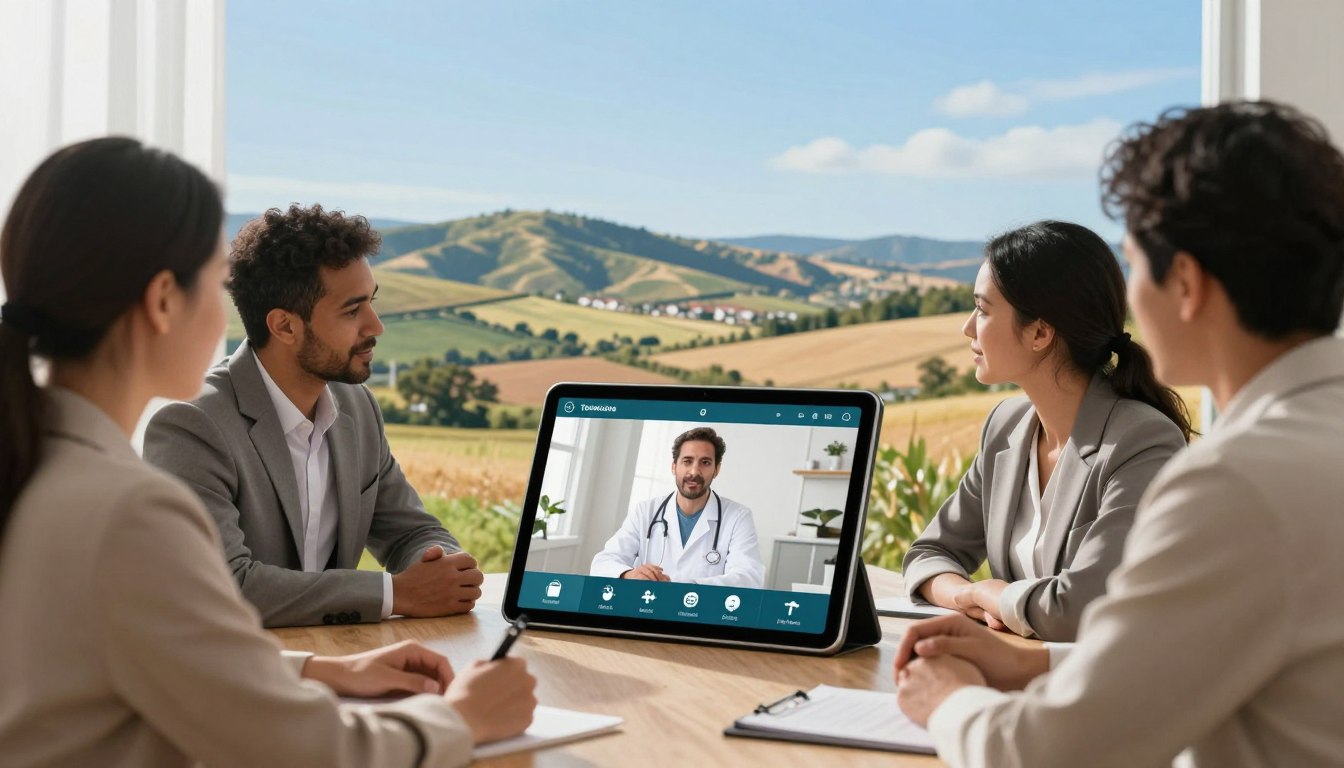
Telemedicine Apps Bridging the Rural Healthcare Gap in the US
Nearly 20% of the US population lives in rural areas, where access to healthcare services is often limited due to a shortage of medical professionals and facilities. However, a significant shift is underway, with telemedicine apps emerging as a vital solution to this issue.

By leveraging telecommunication technologies, these apps enable patients to consult with healthcare providers remotely, thereby improving healthcare access in rural communities. This development is revolutionizing the way healthcare is delivered, making it more accessible and equitable.
Key Takeaways
- Telemedicine apps are improving healthcare access in rural US areas.
- These apps enable remote consultations, reducing the need for travel.
- Telecommunication technologies are bridging the healthcare gap.
- Rural communities are benefiting from increased access to medical professionals.
- The use of telemedicine apps is making healthcare more equitable.
The Rural Healthcare Crisis in America
Rural America faces significant healthcare disparities that are deeply rooted in geographical, economic, and social factors. The healthcare landscape in these areas is characterized by numerous challenges that affect the delivery of quality care.
Statistical Overview of Healthcare Disparities
The healthcare disparities in rural America are stark. Statistics reveal that rural areas have higher rates of mortality, disease prevalence, and healthcare costs compared to urban areas. For instance, rural residents are more likely to die from heart disease, cancer, and accidents.
Provider Shortages in Rural Counties
Rural counties face significant shortages of healthcare providers, including primary care physicians and specialists. This shortage is exacerbated by the difficulty in recruiting and retaining healthcare professionals in these areas.
Distance and Transportation Barriers
The distance to healthcare facilities and lack of reliable transportation options pose significant barriers to accessing care in rural areas. This issue is particularly challenging for the elderly and those with chronic conditions.
Key Challenges Facing Rural Communities
Rural communities encounter a multitude of challenges, including hospital closures, financial instability, and limited access to specialist care. These challenges are interconnected and compound the healthcare disparities.
Hospital Closures and Financial Sustainability
The closure of hospitals in rural areas not only reduces access to emergency care but also impacts the financial sustainability of the remaining healthcare facilities. This can lead to a vicious cycle of decline in healthcare infrastructure.
Limited Specialist Access
Rural residents often have limited access to specialist care, requiring them to travel long distances for specialized treatment. This can delay diagnosis and treatment, worsening health outcomes.
| Indicator | Rural Areas | Urban Areas |
|---|---|---|
| Primary Care Physicians per 100,000 | 65.4 | 83.2 |
| Specialist Care Access | Limited | Adequate |
| Hospital Closure Rate | Higher | Lower |
Understanding Telemedicine: Evolution and Current Landscape
The telemedicine landscape has undergone significant transformations since its inception. This evolution has been driven by advancements in technology and the need for more accessible healthcare services, particularly in rural areas.
From Early Telehealth to Modern Digital Solutions
Telemedicine has its roots in early telehealth initiatives, which used basic technologies like telephone and fax to provide remote healthcare services.
Historical Development of Remote Healthcare
The concept of remote healthcare dates back to the early 20th century, with the use of telephone for medical consultations. Over time, technology evolved, incorporating video conferencing and digital platforms.
Pandemic-Accelerated Adoption
The COVID-19 pandemic significantly accelerated the adoption of telemedicine, as healthcare providers sought to minimize in-person interactions while maintaining care. This rapid expansion highlighted the potential of virtual healthcare in addressing healthcare disparities.
Technological Advancements Enabling Remote Care
Several technological advancements have played a crucial role in the development of modern telemedicine.
Smartphone Penetration in Rural Areas
The widespread adoption of smartphones has been a key factor in the success of telemedicine, enabling patients in rural areas to access healthcare services remotely. As of 2022, over 90% of the US population owns a smartphone, facilitating virtual consultations.
Cloud-Based Healthcare Solutions
Cloud technology has enabled secure, scalable, and flexible healthcare solutions, allowing for the efficient storage and management of patient data. This has been particularly beneficial for telemedicine platforms.
| Technological Advancement | Impact on Telemedicine |
|---|---|
| Smartphone Penetration | Increased access to virtual healthcare services |
| Cloud-Based Solutions | Enhanced data security and scalability |
| Video Conferencing | Improved remote consultation capabilities |
How Telemedicine Apps Are Solving Healthcare Access Issues in Rural America
Telemedicine apps are revolutionizing healthcare access in rural America. These digital solutions are addressing long-standing issues related to distance, specialist shortages, and emergency response times.
Overcoming Distance Barriers
Telemedicine apps significantly reduce the need for lengthy travels to receive medical care. This is particularly beneficial for rural residents who often live far from healthcare facilities.
Eliminating Travel Requirements
By allowing patients to consult with healthcare providers remotely, telemedicine apps eliminate the need for travel, saving time and reducing expenses associated with transportation.
Time Savings for Patients
Patients using telemedicine apps can save considerable time that would otherwise be spent traveling to and waiting at healthcare facilities, allowing for more efficient use of their time.
Addressing Specialist Shortages
Rural areas often face shortages of specialist doctors. Telemedicine apps help bridge this gap by connecting rural patients with urban specialists.
Virtual Consultations with Urban Specialists
Telemedicine enables rural patients to have virtual consultations with specialists from urban areas, ensuring they receive the care they need without having to travel.
Collaborative Care Models
These apps also facilitate collaborative care models where local primary care providers work alongside remote specialists to provide comprehensive care.
Improving Emergency Response Times
Telemedicine apps can significantly improve response times in emergency situations by providing immediate access to healthcare professionals.
Remote Triage Capabilities
Remote triage allows healthcare providers to quickly assess the severity of a patient’s condition and provide immediate guidance.
Emergency Guidance for Local Providers
Local healthcare providers can receive real-time guidance from specialists during emergencies, enhancing the quality of care provided.
| Benefits of Telemedicine Apps | Description | Impact on Rural Healthcare |
|---|---|---|
| Overcoming Distance | Eliminates travel requirements and saves time | Improved access to healthcare services |
| Addressing Specialist Shortages | Connects rural patients with urban specialists | Enhanced specialist care for rural residents |
| Improving Emergency Response | Provides remote triage and emergency guidance | Faster and more effective emergency care |
Essential Features of Effective Rural Telemedicine Applications
For rural telemedicine to be successful, applications must be developed with certain essential features in mind. These features are crucial in ensuring that telemedicine apps are accessible, usable, and beneficial for rural populations.
User-Friendly Interfaces for All Age Groups
A user-friendly interface is vital for the adoption and effective use of telemedicine applications across various age groups in rural areas.
Accessibility Features for Seniors
Including features such as large font options, high contrast modes, and simple navigation can significantly enhance usability for seniors.
Simplified Navigation Systems
Intuitive menu systems and clear categorization of services help users quickly find the information they need.
Low-Bandwidth Functionality
Given the often limited internet connectivity in rural areas, telemedicine apps must be capable of functioning effectively under low-bandwidth conditions.
Offline Capabilities
Allowing certain features to work offline can be a significant advantage, enabling users to access some functionalities even without a stable internet connection.
Data Compression Technologies
Implementing data compression can reduce the amount of bandwidth required for video consultations and data transfer.
Secure Data Management Systems
Ensuring the security and privacy of patient data is paramount in telemedicine applications.
HIPAA Compliance Measures
Adhering to HIPAA guidelines is essential for protecting patient health information.
Patient Data Protection Protocols
Implementing robust encryption and secure storage solutions safeguards patient data.
| Feature | Description | Benefit |
|---|---|---|
| User-Friendly Interface | Easy to navigate for all age groups | Increased adoption rates |
| Low-Bandwidth Functionality | Works effectively with limited internet | Accessibility in rural areas |
| Secure Data Management | Protects patient health information | Compliance with regulations |
Leading Telemedicine Platforms Serving Rural Communities
The rise of telemedicine is bridging the healthcare gap in rural areas by providing access to quality medical services. Several telemedicine platforms are now serving rural communities, offering a range of healthcare services.
Primary Care Focused Applications
Several telemedicine platforms are focusing on primary care, offering rural residents convenient access to general medical services. These platforms are crucial in addressing the shortage of primary care physicians in rural areas.
Amwell and Teladoc Solutions
Amwell and Teladoc are prominent players, providing virtual consultations with primary care physicians. They offer a range of services, from routine check-ups to chronic condition management.
MDLive and Doctor On Demand Services
MDLive and Doctor On Demand offer similar services, ensuring that rural patients have multiple options for their primary care needs. These platforms are enhancing healthcare access in rural America.
Specialty Care Solutions
Telemedicine is also expanding into specialty care, addressing the shortage of specialists in rural areas. This expansion is critical for patients who need specialized care.
Cardiology and Neurology Platforms
Specialized platforms for cardiology and neurology are now available, allowing patients to consult with specialists remotely. This development is improving outcomes for patients with complex conditions.
Dermatology and Ophthalmology Applications
Dermatology and ophthalmology services are also being offered through telemedicine, improving access to these specialists. Patients can now receive expert advice without traveling long distances.
Mental Health Telemedicine Services
Mental health services are a crucial aspect of telemedicine, providing support to rural communities. The isolation and challenges faced by rural populations make mental health services particularly important.
Talkspace and BetterHelp Accessibility
Platforms like Talkspace and BetterHelp offer accessible mental health counseling services. These services are vital for individuals who may not have access to in-person counseling.
Rural-Specific Mental Health Initiatives
Some telemedicine services are specifically designed to address the mental health needs of rural populations. These initiatives are tailored to the unique challenges faced by rural communities.
As telemedicine continues to evolve, it is likely that more platforms will emerge to serve rural communities, further enhancing virtual healthcare options.
The Economic Impact of Telemedicine in Rural Healthcare
Telemedicine apps are not only improving healthcare access but also bringing substantial economic relief to rural communities. The economic benefits of telemedicine in rural America are becoming increasingly evident, from cost savings for patients to job creation within the healthcare sector.
Cost Savings for Patients and Healthcare Systems
The implementation of telemedicine has led to significant cost savings for both patients and healthcare systems. By reducing the need for travel and hospitalizations, telemedicine is proving to be a cost-effective solution.
Reduced Transportation Expenses
Patients in rural areas often face long distances to reach healthcare facilities. Telemedicine eliminates the need for these trips, saving patients money on transportation costs. According to a study, patients can save up to $500 annually on travel expenses alone.
Decreased Hospital Readmissions
Telemedicine enables healthcare providers to monitor patients remotely, reducing the likelihood of hospital readmissions. Remote monitoring allows for timely interventions, improving patient outcomes and reducing healthcare costs.
Job Creation and Local Economic Benefits
Beyond cost savings, telemedicine is also contributing to job creation and local economic benefits in rural America. As telemedicine continues to grow, it is creating new opportunities for employment and economic sustainability.
Telemedicine Support Positions
The growth of telemedicine has led to the creation of new job opportunities, including telemedicine support positions such as coordinators and technical support staff. These roles are crucial for the successful implementation of telemedicine services.
Rural Hospital Sustainability
Telemedicine is also playing a critical role in sustaining rural hospitals. By enabling these hospitals to offer specialized care remotely, telemedicine is helping them stay financially viable. As noted by the Rural Health Information Hub, “Telemedicine can be a lifeline for rural hospitals, helping them maintain financial stability.”

Policy and Regulatory Developments Supporting Telemedicine Expansion
Telemedicine’s potential to address rural healthcare disparities is being unlocked through targeted policy and regulatory updates. These developments are crucial in creating an environment that supports the growth and adoption of telehealth services.
Federal Initiatives and Funding
The federal government has launched several initiatives to support telemedicine expansion. Key programs include:
FCC Rural Health Care Program
The FCC’s Rural Health Care Program provides funding to eligible healthcare providers to support their telehealth initiatives, ensuring they have the necessary infrastructure.
USDA Distance Learning and Telemedicine Grants
The USDA offers grants to facilitate distance learning and telemedicine, particularly in rural areas, enhancing access to healthcare and educational services.
State-Level Telemedicine Regulations
States are also playing a crucial role in shaping telemedicine regulations.
Licensing Across State Lines
Many states have adopted policies allowing healthcare providers to practice across state lines, expanding the reach of telemedicine services.
Practice Standards Adaptations
States are adapting practice standards to accommodate telemedicine, ensuring that care delivered remotely meets the same standards as in-person care.
Insurance Coverage and Reimbursement Changes
Changes in insurance coverage and reimbursement policies are critical for telemedicine’s sustainability.
Medicare Telehealth Policies
Medicare has expanded its telehealth coverage, including more services and greater flexibility for providers, enhancing access to care for beneficiaries.
Private Insurer Approaches
Private insurers are also evolving their coverage policies, with many now offering telemedicine benefits, reflecting a growing recognition of telehealth’s value.
| Initiative | Description | Impact |
|---|---|---|
| FCC Rural Health Care Program | Funding for telehealth infrastructure | Enhanced connectivity for rural healthcare |
| USDA Distance Learning and Telemedicine Grants | Grants for rural telemedicine and education | Increased access to healthcare and education |
Case Studies: Successful Telemedicine Implementations in Rural America
Successful telemedicine initiatives in rural America demonstrate the potential of digital health solutions to bridge the healthcare gap. Various regions have seen significant improvements in healthcare access and outcomes through the adoption of telemedicine applications.
Appalachian Telehealth Initiatives
The Appalachian region has benefited greatly from telemedicine, with initiatives such as the University of Virginia’s Telemedicine Network and the Kentucky TeleHealth Network showing promising results.
University of Virginia’s Telemedicine Network
The University of Virginia’s Telemedicine Network has expanded healthcare access to rural areas, providing specialty care services to patients who otherwise would have to travel long distances.
Kentucky TeleHealth Network Outcomes
The Kentucky TeleHealth Network has reported improved health outcomes and patient satisfaction, with a significant reduction in hospital readmissions and emergency department visits.
Midwestern Agricultural Communities
Telemedicine has also made a positive impact in Midwestern agricultural communities, with programs like Avera eCARE and the University of Kansas Medical Center’s initiatives improving healthcare delivery.
Avera eCARE’s Rural Impact
Avera eCARE has provided critical care services to rural hospitals, enhancing the quality of care and reducing the need for patient transfers.
University of Kansas Medical Center Programs
The University of Kansas Medical Center has implemented various telemedicine programs, including those focused on chronic disease management and mental health services, leading to better health outcomes for rural residents.
Tribal Healthcare Telemedicine Programs
Tribal communities have also benefited from telemedicine, with initiatives such as the Indian Health Service Telehealth Expansion and tribal-specific application adaptations improving healthcare access.
Indian Health Service Telehealth Expansion
The Indian Health Service has expanded its telehealth services, providing a range of healthcare services to tribal communities, including primary care, specialty care, and mental health services.
Tribal-Specific Application Adaptations
Efforts have been made to adapt telemedicine applications to meet the specific needs of tribal communities, including culturally sensitive care and language support.
| Region | Telemedicine Initiative | Outcomes |
|---|---|---|
| Appalachia | University of Virginia’s Telemedicine Network | Improved access to specialty care |
| Midwest | Avera eCARE | Enhanced critical care services |
| Tribal Communities | Indian Health Service Telehealth Expansion | Increased access to healthcare services |
Overcoming Implementation Challenges
Telemedicine, while promising, encounters significant barriers in rural America. Successfully implementing telemedicine requires addressing these challenges head-on.
Broadband Access Issues
Rural areas often struggle with inadequate broadband infrastructure, hindering telemedicine adoption.
Current Connectivity Statistics
As of recent data, only 63% of rural America has access to broadband speeds considered sufficient for telemedicine services.
Infrastructure Improvement Initiatives
Efforts to improve broadband include government initiatives and private investments aimed at expanding fiber-optic networks and enhancing mobile coverage.
Technology Adoption Among Older Populations
Older adults in rural areas may be less familiar with digital technologies, posing a challenge for telemedicine.
Digital Literacy Programs
Programs focusing on digital literacy can help bridge this gap by educating seniors on how to use telemedicine platforms.
Family-Assisted Telemedicine
Involving family members in the telemedicine process can also facilitate its use among older populations.
Provider Training and Adaptation
Healthcare providers must be adequately trained to effectively utilize telemedicine technologies.
Clinical Workflow Integration
Integrating telemedicine into existing clinical workflows is crucial for its success.
Resistance to Change Management
Addressing provider resistance through training and demonstrating the benefits of telemedicine can help manage change.

The Patient Experience: Perspectives from Rural Communities
Telemedicine is bridging the healthcare gap in rural America, enhancing patient experiences. The shift towards virtual healthcare is not just about technology; it’s about improving lives.
Satisfaction Rates and Feedback
Studies have shown high satisfaction rates among rural patients using telemedicine services. Patients appreciate the convenience and accessibility of healthcare technology.
Comparative Studies with In-Person Care
Research comparing telemedicine to traditional in-person care has shown similar patient satisfaction levels. This indicates that telemedicine is a viable alternative for rural healthcare.
Quality of Care Perceptions
Patients report high confidence in the quality of care received through telemedicine. The ability to consult with specialists remotely has improved health outcomes.
Personal Stories of Improved Access
Many patients have shared stories of how telemedicine has improved their access to healthcare. From managing chronic diseases to receiving timely emergency interventions, the impact is significant.
Chronic Disease Management Success Stories
Patients with chronic conditions have seen improvements in their health due to regular monitoring and timely interventions through telemedicine.
Emergency Intervention Testimonials
Telemedicine has also played a crucial role in emergency situations, providing immediate care and reducing the need for hospital visits.
Future Innovations in Rural Telemedicine
The landscape of rural healthcare is being reshaped by cutting-edge telemedicine innovations, enhancing telehealth services and rural healthcare solutions. As technology advances, we can expect significant improvements in patient care and access to medical services.
AI and Machine Learning Applications
Artificial intelligence (AI) and machine learning are set to play a crucial role in the future of telemedicine. These technologies will enhance diagnostic accuracy and personalize patient care.
Diagnostic Assistance Tools
Diagnostic assistance tools powered by AI will help healthcare providers make more accurate diagnoses, improving patient outcomes.
Predictive Healthcare Analytics
Predictive healthcare analytics will enable proactive care by identifying potential health issues before they become critical.
Remote Monitoring Advancements
Advancements in remote monitoring technologies will allow for more effective patient care outside traditional healthcare settings.
Wearable Technology Integration
The integration of wearable technology will enable continuous monitoring of patients’ vital signs, enhancing remote care.
Home-Based Diagnostic Devices
Home-based diagnostic devices will empower patients to manage their health more effectively, reducing the need for hospital visits.
Integration with Emerging Technologies
The future of rural telemedicine will also involve integration with emerging technologies like 5G and virtual reality.
5G Connectivity Implications
5G connectivity will provide faster data transfer rates, enhancing the quality of telemedicine services.
Virtual Reality Applications in Telemedicine
Virtual reality applications will offer new possibilities for therapy and patient education, further expanding rural healthcare solutions.
Conclusion: The Transformative Potential of Telemedicine for Rural Healthcare
Telemedicine apps are revolutionizing healthcare access in rural America, bridging the gap between rural communities and quality medical care. By leveraging technology, these apps are solving healthcare access issues in rural America, providing timely and efficient healthcare services to those who need them most.
The transformative potential of telemedicine lies in its ability to overcome distance barriers, address specialist shortages, and improve emergency response times. As seen in various case studies, successful telemedicine implementations have improved patient outcomes, reduced healthcare costs, and enhanced the overall quality of life for rural residents.
As the healthcare landscape continues to evolve, it is essential to build on the momentum of telemedicine expansion, addressing challenges such as broadband access and technology adoption among older populations. By doing so, we can ensure that telemedicine apps continue to play a vital role in shaping the future of rural healthcare.
FAQ
What are telemedicine apps, and how do they work?
Telemedicine apps are digital platforms that enable patients to receive medical consultations and care remotely through video conferencing, phone calls, or messaging. They work by connecting patients with healthcare providers through a secure and user-friendly interface, allowing for virtual consultations and treatment plans.
How do telemedicine apps address healthcare access issues in rural America?
Telemedicine apps address healthcare access issues in rural America by overcoming distance barriers, addressing specialist shortages, and improving emergency response times. They provide patients with access to medical care from the comfort of their own homes, reducing the need for lengthy travel to receive medical attention.
What are the essential features of effective rural telemedicine applications?
Effective rural telemedicine applications should have user-friendly interfaces, low-bandwidth functionality, and secure data management systems. They should also be accessible on a variety of devices, including smartphones and tablets, and have offline capabilities to accommodate areas with poor internet connectivity.
Are telemedicine services covered by insurance, including Medicare and Medicaid?
Many telemedicine services are covered by insurance, including Medicare and Medicaid. However, coverage varies depending on the specific insurance provider and the type of telemedicine service being used. Patients should check with their insurance provider to determine the extent of their coverage.
How do telemedicine apps ensure patient data protection and HIPAA compliance?
Telemedicine apps ensure patient data protection and HIPAA compliance by implementing robust security measures, such as encryption, secure servers, and access controls. They also adhere to HIPAA guidelines for handling and storing patient data, ensuring confidentiality and integrity.
Can telemedicine apps be used for emergency medical situations?
While telemedicine apps can be used for emergency medical situations, they are not a replacement for in-person emergency care. Telemedicine apps can provide remote triage and guidance, but patients in life-threatening situations should seek immediate in-person medical attention.
How do telemedicine apps improve patient outcomes in rural areas?
Telemedicine apps improve patient outcomes in rural areas by providing timely access to medical care, reducing hospital readmissions, and enabling patients to manage chronic conditions more effectively. They also facilitate collaborative care models, allowing healthcare providers to work together to deliver high-quality care.